
Electricity as a right:
There is no express right to electricity under the Constitution of the Republic of South Africa, 1996[1] (“the Constitution”). However, unwarranted/unlawful removal of access to electricity may still be against your common law rights as well as your right to dignity under section 10 of the Constitution. Electricity has become, over the last century, a norm and indeed a necessity for the travails of modern life. The evolution of kitchen appliances, the introduction of cellular devices and even the use of heated geysers require electricity as a necessity.
How does one determine where you stand when it comes to the removal and/or reversal of one’s access to electricity?
As a point of departure, the first step would be to examine and establish where your right to electricity stems from. One would need to determine whether such right stems from the common law, legislation, or the Constitution.
The right to electricity as an indirect right:
From the Constitutions point of view, one cannot rely directly on electricity as a right . Imagine you’ve just bought a new wind turbine, and you want to generate electricity, what do you need? Wind! The same concept applies to accessing your right to electricity in the courts. To realise that right, you would have to rely on a different right in the Constitution.[2] For instance, if your landlord restricts your electricity control, due to your unpaid rentals and now your family is suffering, you could raise your right to dignity under the Constitution.[3] You cannot, however, rely directly on a right (to electricity) itself.
The right to electricity and legislation:
In relation to the aforesaid example, where you are in arrears with your rent, and consequently your access to electricity is deprived by your landlord, you may utilize the Electricity Regulation Act 4 of 2006[4] (“the Act”) to safeguard your right to electricity.
As per the Act, a landlord cannot withhold access to electricity in lieu of payment of rent. Your access may only be withheld if you do not pay for the electricity given to you. Thus, under these circumstances, you could seek relief from the applicable court using a spoliation application or approach a relevant forum such as the Rental Housing Tribunal.
The right to electricity and the common law:
The above is quite straightforward; however, when you delve into the common law instances of deprivation of electricity, it is much more convoluted. It may deal with legal concepts such as –
- quasi-possession;
- servitudes;
- personal rights; and
- contractual rights.
Servitudes are limited real rights over immovable property. A servitude is expressed over someone’s property; therefore, you cannot lay full claim to the property as if you were the owner and it differs from ownership.[5] You do not have the exclusive right to use and enjoy the property. To claim deprivation in these circumstances, you would have to show that the electricity supplied to the property is incidental (i.e. part of another primary agreement).[6]
Electricity is intangible. Therefore, a claimant would show that they have “quasi-possession” over the electricity.[7]
Now, what is quasi-possession? Imagine that you are at your friend’s house. Your friend hands you the TV remote and says, “Choose what you want to watch.” Here, you do not own the TV, and you cannot sell it, throw it away or take it with you. However, you have the power to control how the TV is being used for a limited purpose. This is similar to quasi-possession, which encompasses a more personal and immaterial nature, rather than a physical one. In legal terms, to prove you have quasi-possession, one must show that you had actual use of the content of the right in question. As you are claiming over an incorporeal, that is something you cannot feel, touch or hold. So actual possession cannot be proven by sight.[8]
Now before moving forward, it is crucial to illustrate and summarize the core idea highlighted in the aforementioned paragraphs. It is not about electricity itself, it’s about whether you have been given access to electricity and if such electricity has been deprived for permissiblereasons.
Eskom and the right to electricity:
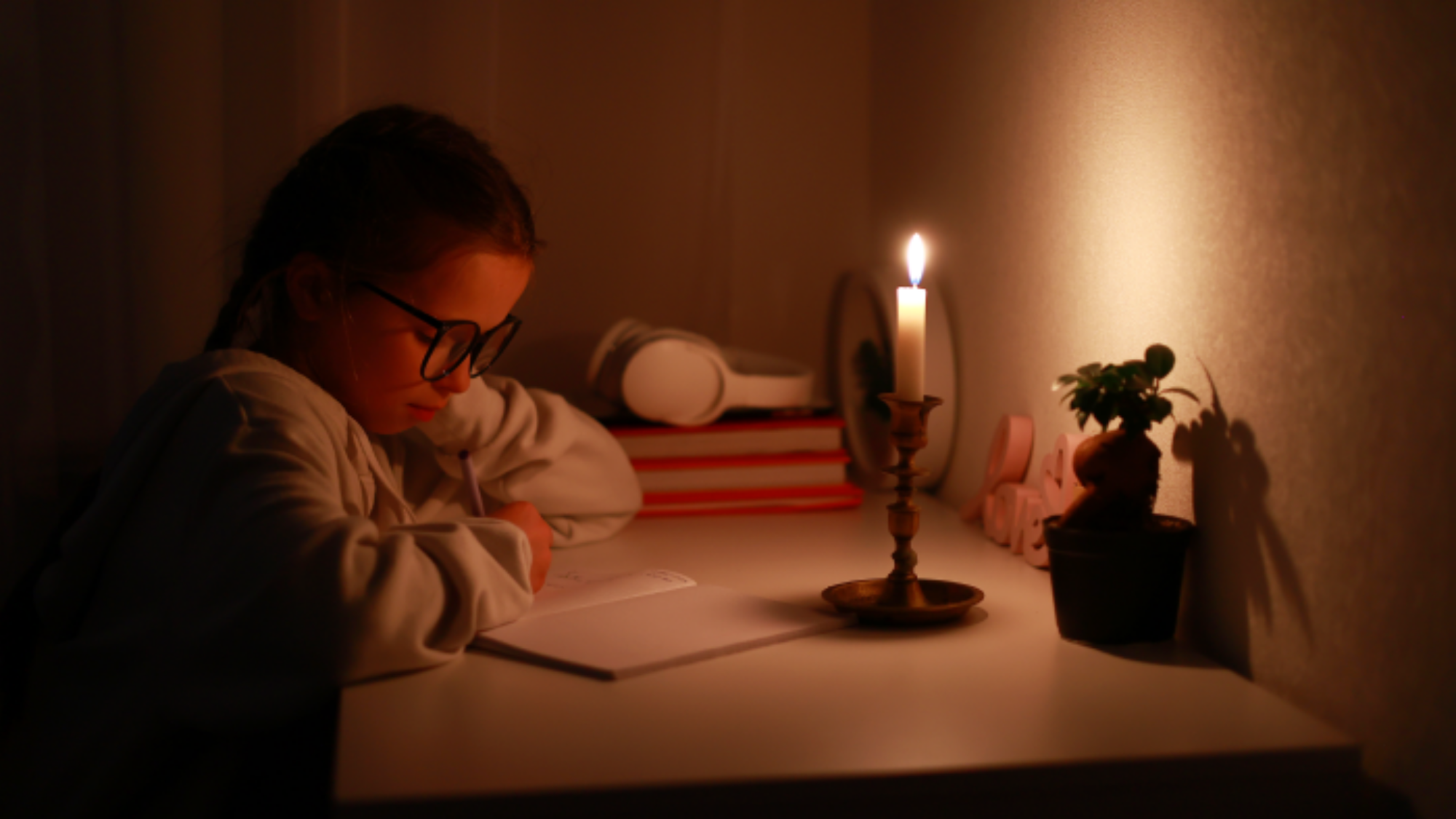
Further on municipal and parastatal functioning with the constitutional aspect in mind; there exists a direct correlation between a municipality receiving electricity and consumers/the public prospering. Eskom provides and municipalities receive. When Eskom’s load shedding swept across the country, homes were plunged into darkness, candles replaced bulbs, and most would argue that it was detrimental to our rights as citizens. Schoolchildren had to study by candlelight; productive workers were stuck in traffic because of downed robots and even hospitals and other critical infrastructure were affected. Eskom was the one and only provider of electricity, with its sole duty to provide this service, failing which would be against our rights as citizens.
It is reasonable to believe that this era was completely unique compared to legislative, common law and constitutional instances of deprivation of electricity (non-governmental). Eskom had numerous structural failures which compromised their ability to produce electricity according to the demand needed by society. Such failure was a result of an array of factors, such as aging powerplants, maintenance issues and management issues.
There was no route or solution in which the government could provide for its citizens. If you examine the Constitution and the Bill of Rights and zoom in on section 26 – being the provision in regard to housing – it expressly states that every citizen has a right to a house. [9]
However, there is a caveat to section 26 of the Constitution; it is purely dependent on the government’s ability to provide housing for the people.[10] If 20 million people require a house to be built for their individual needs and the government does not have the resources for instance, to service each and every request or the framework to build each and every house needed by the people, what can be done? The government cannot practically nor reasonably be stretched so thin as to merely enforce this one right, which would credibly consume all their resources.
One cannot claim right to a house on demand.[11] It is important to bring to light that rights under the Constitution are not always absolute, and given the appropriate circumstances, are subject to limitations. To justify this, it may speak to whether it infringes on the core or a periphery aspect of the right. You cannot strike at the heart of the right; you may only detract from an outlying aspect of the right for a justified reason.
Both your right to housing and your right to electricity may be limited; however, the circumstances in which they may be limited ultimately differ and depend on different factors. .
Conclusion:
In conclusion and having considered the above examples and relevant case law, it is most prudent to state that we do not possess a direct right to electricity under the Constitution, and access to electricity is a privilege in some circumstances and a direct right in others.
If you are feeling “in the dark” about what your rights are, and how they can be enforced, it is always recommended to consult with legal professionals. At Adriaans Attorneys, we are dedicated to lighting the way with trusted legal guidance, tailored solutions and unwavering integrity – your trusted light in every legal matter.
[1] The Constitution of the Republic of South Africa, 1996. [2] Ibid [3] Ibid ; section 10 [4] Electricity Regulation Act 4 of 2006. [5] Hanri Mostert & five others The principles of the Law of Property in South Africa Eleventh impression 2018 [6] Makeshift 1190 (PTY) LTD V Cilliers [2020] 3 All SA 234 (WCC) [7] Eskom Holdings SOC Limited v Masinda [2019] JOL 44966 (SCA) [8] Supra note 6 [9] Supra note 1 at section 26 [10] The Government of the Republic of South Africa and others v Grootboom and others [2000] JOL 7524 (CC) [11] IbidCandidate Attorney
While every reasonable effort is taken to ensure the accuracy and soundness of the contents of this publication, neither writers of the articles nor the publisher will bear any responsibility for the consequences of any actions based on information or recommendations contained herein. Our material is for informational purposes and should not be construed as legal advice.
Add a Comment